


Sustainability
Chez NZA New Zealand Auckland, nous nous engageons à intégrer la durabilité dans tous les aspects de notre activité. Il s’agit d’un processus continu, qui inclut des choix attentifs dans la sélection des matières de nos collections, ainsi qu’une conception et une construction responsables de nos magasins.

La mission de NZA New Zealand Auckland est de continuer à créer des produits désirables et durables, qui résonnent avec nos clients, et qui sont fabriqués dans le respect des personnes et de la planète.
Nous cherchons à réduire notre impact environnemental étape par étape, en reconnaissant que le changement durable demande du temps et des efforts continus.
Conformité sociale
NZA New Zealand Auckland s’attache à garantir des conditions de travail sûres, saines et équitables dans l’ensemble de sa chaîne d’approvisionnement. Ces standards sont définis dans le Code de conduite de NZA New Zealand Auckland et sont renforcés par notre adhésion à l’Amfori Business Social Compliance Initiative (BSCI) depuis 2023.
Amfori est une association mondiale d’entreprises qui promeut le commerce durable et soutient nos démarches de due diligence ESG afin d’améliorer la performance Environnementale, Sociale et de Gouvernance de notre chaîne d’approvisionnement.
APPROVISIONNEMENT
NZA New Zealand Auckland a mis en place un processus d’intégration des usines (Factory Onboarding Process) afin de garantir que les nouvelles usines de la chaîne d’approvisionnement sont auditées avant tout lancement de production.
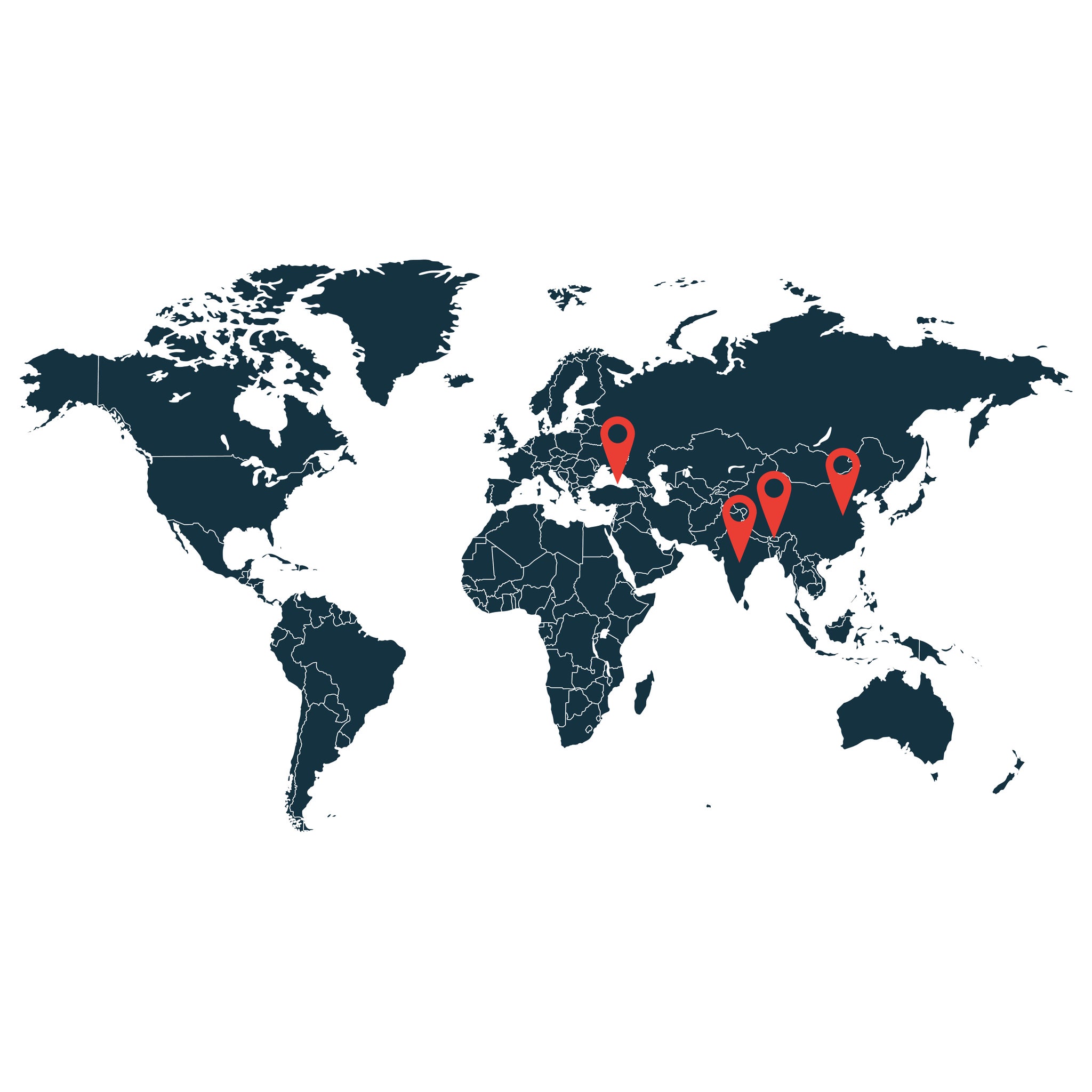
Grâce à nos équipes sur le terrain en Chine et au Bangladesh, nous travaillons en continu à l’amélioration de nos processus en visitant régulièrement nos usines.
Pour assurer un suivi efficace des fournisseurs, la transparence tout au long de la chaîne d’approvisionnement est essentielle. NZA New Zealand Auckland est fier de disposer d’une visibilité complète sur ses fournisseurs et usines de rang 1 (tier 1), c’est-à-dire les usines qui produisent les produits finis. Cette visibilité a été rendue possible notamment grâce au voucher ICSR de MVO Nederland.
NZA New Zealand Auckland poursuit la cartographie de la chaîne d’approvisionnement en aval et progresse vers une transparence totale.

LIVE OCEAN FOUNDATION
NZA New Zealand Auckland incarne l’esprit de nature sauvage et de paysages d’exception, et met en lumière la beauté et la biodiversité de la Nouvelle-Zélande. Pour contribuer à restaurer et à protéger la nature et la faune, nous reversons chaque année une partie des revenus de nos ventes de parfums à la Live Ocean Foundation.
La Live Ocean Foundation collabore avec des scientifiques, innovateurs et communicants néo-zélandais de premier plan afin d’accélérer l’action en faveur d’un océan en bonne santé. Elle s’appuie sur la force du sport pour porter ces connaissances et cette ambition sur la scène internationale. Pour en savoir plus sur leurs projets ou faire un don, veuillez consulter le site de Live Ocean.
MATIÈRES
NZA New Zealand Auckland s’est fixé des objectifs annuels visant à augmenter de 10 % (en poids) l’utilisation de matières plus durables.
NZA New Zealand Auckland est membre de Better Cotton et s’approvisionne en coton via le système de crédits BCI. En soutenant la mission de Better Cotton, nous nous engageons à améliorer les pratiques de culture du coton à l’échelle mondiale. Notre coton est sourcé via un système de bilan massique (mass balance). Cela signifie que le Better Cotton est mélangé à du coton conventionnel ; ainsi, le produit fini peut ne pas contenir physiquement de Better Cotton.
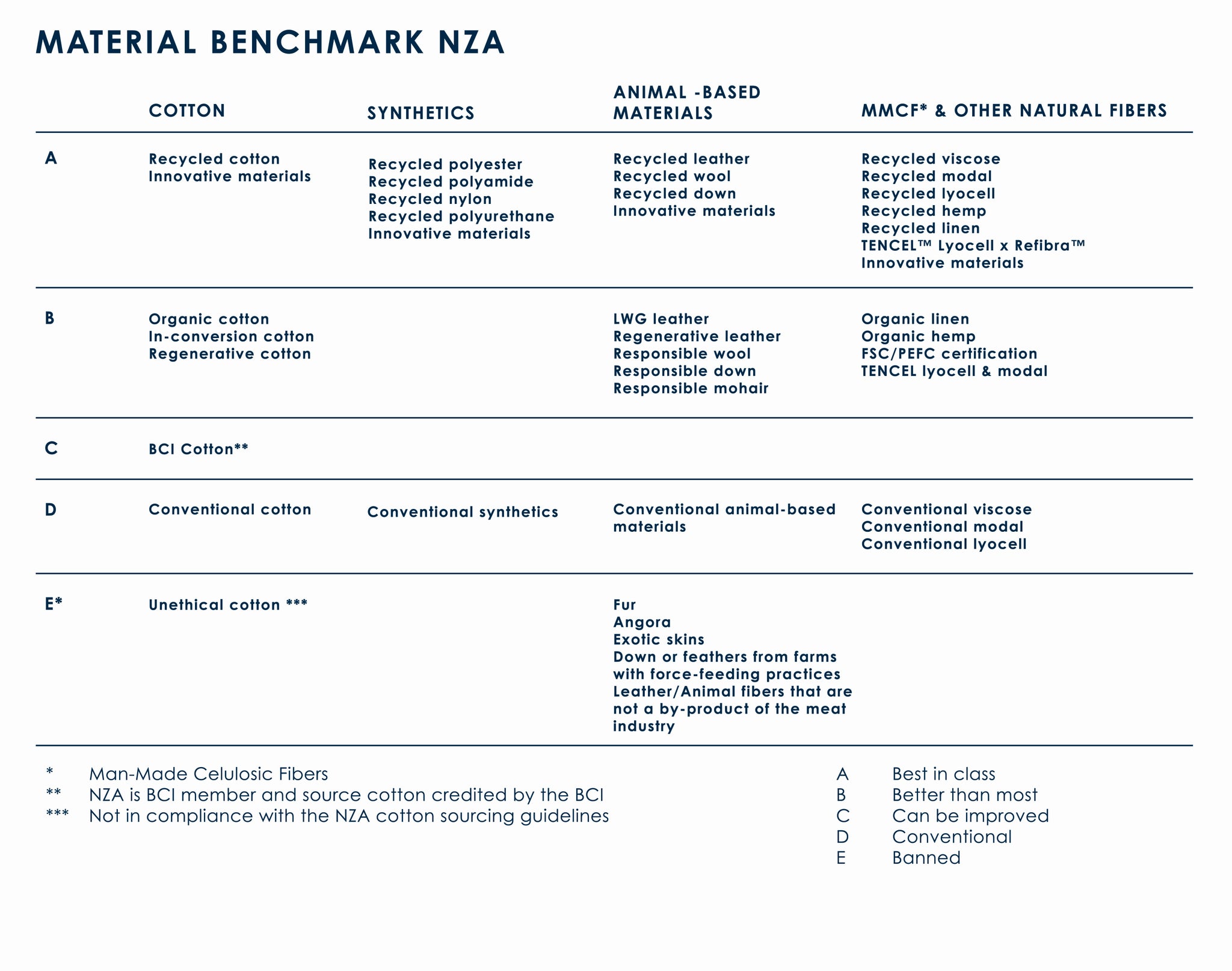
Nous visons à éliminer progressivement tout le coton conventionnel de nos produits d’ici 2030. Dans cette optique, nous nous engageons à intégrer davantage de coton biologique et recyclé à chaque collection. Par ailleurs, nos équipes s’efforcent de sélectionner les meilleures matières pour nos produits selon notre référence interne (material benchmark).
Coton biologique
Les fibres de coton biologique sont cultivées sans pesticides toxiques ni engrais chimiques. Sa culture contribue à améliorer la qualité des sols, à prévenir la contamination de l’eau et à préserver la biodiversité.
Coton recyclé
Le coton recyclé est fabriqué à partir de déchets pré- et post-consommation ou post-industriels. Son utilisation permet d’économiser des matières premières, de l’eau, des produits chimiques et de l’énergie, et constitue donc un levier efficace pour réduire l’impact environnemental.
Coton BCI
Notre coton est issu d’un système de bilan massique : le Better Cotton est mélangé à du coton conventionnel, de sorte que le produit fini peut ne pas contenir physiquement de Better Cotton. Cependant, en tant que membre, NZA New Zealand Auckland soutient des pratiques agricoles plus durables et l’amélioration des conditions de vie des communautés de producteurs de coton.
Synthétiques recyclés
Les matières synthétiques recyclées, telles que le polyester et le nylon, sont produites à partir de déchets post-consommation ou post-industriels, comme les bouteilles plastiques en PET et les vêtements — des matériaux qui auraient autrement été envoyés en décharge. Cela évite l’extraction supplémentaire de ressources non renouvelables. En donnant une nouvelle vie aux ressources mises au rebut, on économise des matières premières, de l’eau, des produits chimiques et de l’énergie.

Lin
Le lin est une fibre naturelle dont l’impact environnemental est inférieur à celui de nombreuses autres fibres. Il nécessite moins d’eau et ne requiert pas de pesticides. Les vêtements en lin sont respirants, très absorbants, résistants et durables.
TENCEL™ LYOCELL
La fibre Lyocell est issue de bois provenant de sources durables, certifiées et contrôlées, et produite via un procédé en boucle fermée. Elle transforme la pâte de bois en fibres cellulosiques avec une grande efficacité des ressources et un faible impact environnemental. Tous les produits en TENCEL™ Lyocell disposent d’une certification Lenzing valide.
Laine recyclée
La laine recyclée est fabriquée à partir de matières existantes réutilisées afin d’économiser des ressources. En donnant une nouvelle vie aux ressources mises au rebut, nous économisons des matières premières, de l’eau, des produits chimiques et de l’énergie.
Cuir certifié Leather Working Group – médaille Or
Le processus d’audit LWG évalue la performance environnementale des fabricants de cuir. Les niveaux de médaille ont été établis sur la base des meilleures pratiques de l’industrie afin de reconnaître et récompenser les initiatives environnementales exemplaires. Avec une note Gold, le fabricant a été audité et a obtenu au moins le score minimal (85 %) requis pour la médaille Or, la plus haute classification LWG.

EMBALLAGES
Chez NZA New Zealand Auckland, nous travaillons en continu à l’amélioration de nos pratiques de durabilité, avec un fort accent sur la réduction des plastiques à usage unique dans nos emballages. Tous les polybags que nous utilisons actuellement sont fabriqués à partir de plastiques recyclés, et nos emballages papier sont certifiés FSC.
Nous encourageons activement nos fournisseurs et partenaires à adopter des méthodes d’emballage utilisant moins de matière et des alternatives plus durables. Bien que nous comprenions que cette transition se fasse progressivement, étape par étape, nous nous engageons à avancer de manière constante dans le temps.